Loading...
Serving Monrovia, CA and surrounding areas. (626) 263-8749
A cracked, faded parking lot costs you customers and creates liability. We pave commercial lots in Monrovia with proper base prep and drainage design so the surface stays intact through years of vehicle traffic and San Gabriel Valley heat.
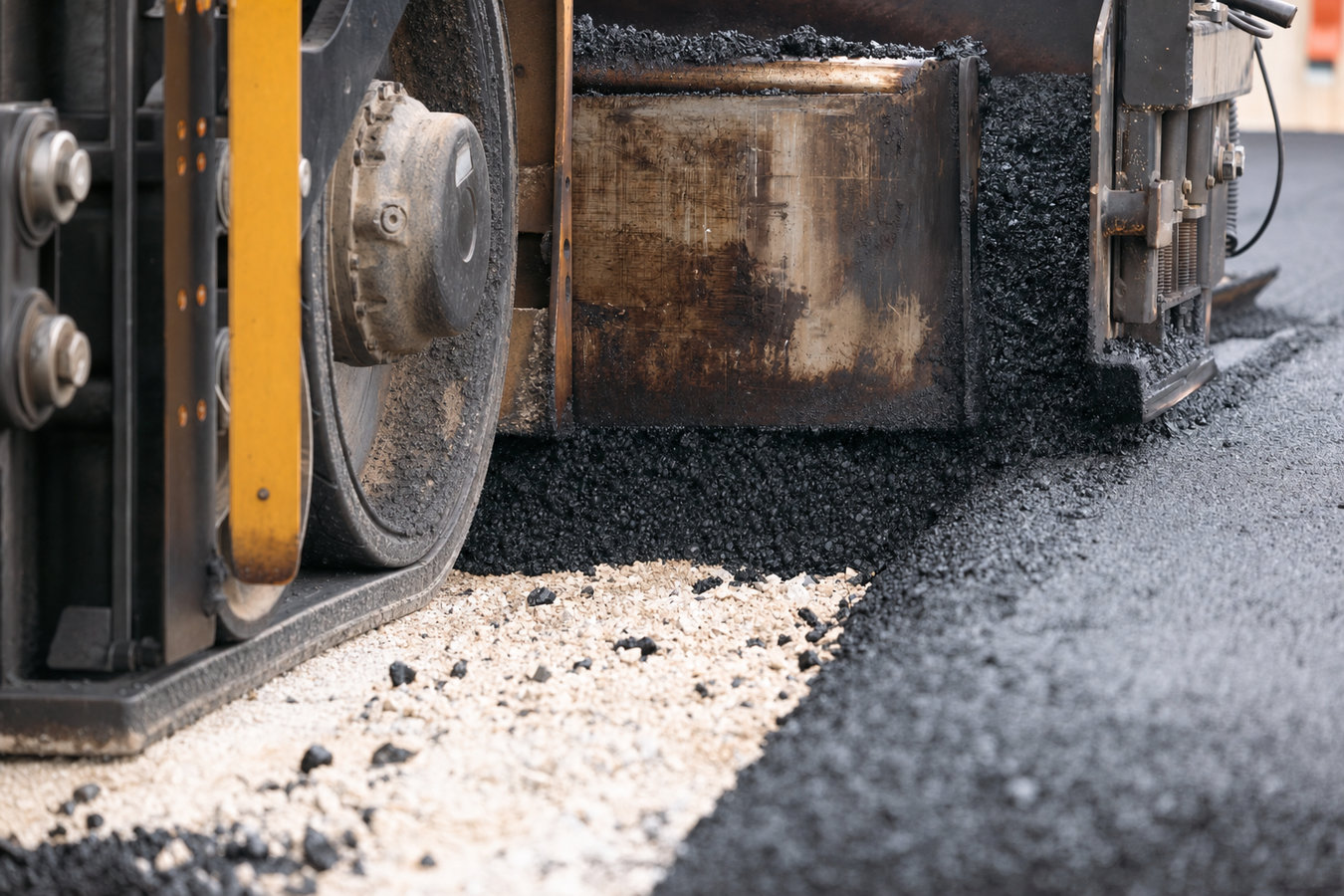
Commercial asphalt paving in Monrovia means removing the old surface if needed, preparing and compacting the base layer, then laying hot-mix asphalt in passes before rolling it smooth - most commercial parking lots are completed in one to three days depending on size and site conditions.
The most important part of any commercial paving project is what happens beneath the surface. A properly graded and compacted base is what prevents the lot from sinking, cracking, or shifting under daily vehicle traffic. Skimping on base preparation is the most common reason a parking lot fails years before it should. In Monrovia, where alluvial soils shift with seasonal moisture changes, that base depth and compaction matters even more than it would in a region with more stable ground.
Commercial paving often works alongside parking lot paving and regular upkeep. After your new surface has fully cured, pairing it with a sealcoat and a maintenance schedule that includes prompt crack repair is the most cost-effective way to push back the next major paving project by many years.
When you see a network of interconnected cracks that looks like broken mosaic tiles across a large area, the pavement has broken down structurally. In Monrovia's heat and sun, this deterioration accelerates once it starts. Patching alone will not fix it - full replacement is the cost-effective path at this stage.
If your lot holds puddles long after a rainstorm, the surface has settled unevenly or was never graded properly. Standing water softens the base and speeds up pavement failure. Given that Monrovia's rainy season can bring heavy rainfall in short bursts, poor drainage is a problem that compounds quickly each winter.
Asphalt that has turned gray and chalky has lost the oils that hold it together - a process the intense San Gabriel Valley sun accelerates significantly. When edges start to crumble and small pieces break off, the surface is past the point where sealing helps. Repaving restores function and appearance.
A deteriorated parking lot creates liability exposure and sends a poor first impression to customers. If tenants, customers, or a property inspection have flagged the surface condition, those are clear signals that acting now is less costly than waiting for the damage to worsen.
We handle the full range of commercial paving work for businesses, property managers, and commercial property owners across Monrovia and the San Gabriel Valley. Full-depth replacement means demolishing and removing the old surface, grading and compacting the subgrade, building the aggregate base to the proper depth for local soil conditions, and laying hot-mix asphalt in passes to the specified thickness. Drainage design is built into every job - not added as an afterthought - because water that sits on a commercial lot is the fastest path to early pavement failure.
We also handle parking lot maintenance for properties that need ongoing upkeep after a major paving project, and parking lot paving for smaller commercial properties or multi-unit residential sites that need a properly designed and laid surface. Permit coordination for work that touches public right-of-way is handled as part of every applicable job.
Best for lots with failed bases, widespread alligator cracking, or persistent drainage problems that patching cannot resolve.
Suited for businesses that need to keep part of the lot accessible during the project, with work done in planned sections.
Designed for properties expanding their paved area, adding parking spaces, or bringing a surface into compliance with current accessibility standards.
Monrovia sits in the San Gabriel Valley foothills where summer temperatures regularly climb into the 90s and the sun is intense year-round. That combination of heat and ultraviolet exposure oxidizes asphalt faster than in cooler climates, causing commercial surfaces to dry out and become brittle sooner than property owners expect. Staying on top of a sealcoat schedule after a new paving job is more important here than in a milder region. At the same time, the alluvial soils beneath Monrovia can shift with seasonal moisture changes - swelling in wet winters and contracting in dry summers - which stresses pavement from below. Contractors who work primarily elsewhere in California may not account for this in their base specification, and that shortcut shows up as premature cracking and settling within a few years.
We serve commercial properties throughout the area, including businesses in El Monte and Temple City where the same soil conditions apply. The best time to pave commercially in this region is during the dry season - roughly late spring through early fall - when the base can be prepared and the asphalt laid without rain interrupting the work. The National Asphalt Pavement Association publishes best practices for base preparation and drainage design that we apply on every commercial project.
We visit your property to measure the area, assess the existing surface and base, and evaluate drainage. You receive a written proposal within one business day that specifies base preparation depth, asphalt thickness, and drainage plan - not just a price per square foot.
If your project touches a public sidewalk, curb, or driveway approach, we pull the required city permits before work begins. We also give you a phased access plan so you can notify tenants and customers in advance - no surprises on day one.
The crew removes the old asphalt - most of which gets recycled - grades and compacts the base, then lays fresh hot-mix asphalt by machine and compacts it with a roller. Base preparation is the critical step and is never rushed.
After the surface cures, line striping and accessibility markings are applied. We do a final walkthrough to confirm drainage, edges, and markings match what was agreed, and discuss a future sealcoat schedule to protect the new surface.
We visit your property, assess the base, and give you a clear written proposal - no guesswork, no surprises, no pressure to decide on the spot.
(626) 263-8749San Gabriel Valley alluvial soils shift with seasonal moisture changes in ways that stress pavement from below. We specify base depth and compaction to account for that movement - not a one-size-fits-all approach copied from projects in other regions.
Water that sits on a commercial lot is the enemy of the pavement beneath it. Drainage design is part of every proposal we write, not an add-on. Proper slope and drainage channels are planned before the first truck arrives, so you are not dealing with the same problem two years later.
Most commercial lots can be paved in sections so part of the property stays accessible throughout the project. We provide a clear phased schedule before work begins so you can communicate with tenants, employees, and customers in advance - not a chaotic surprise.
California requires paving contractors to hold a current state contractor license for this type of work. You can verify ours directly at the California State License Board. We also handle city permit applications for any work that touches public right-of-way, protecting you from fines and required re-work.
Proper base depth, drainage design, and phased scheduling are what separate a commercial paving project that holds up from one that needs attention again in three years. Every project we take on in Monrovia is built to that standard.
Ongoing upkeep after a major paving project keeps your lot in good condition and pushes back the next full replacement.
Learn MoreFor smaller commercial or multi-unit residential properties that need a properly laid and striped parking surface.
Learn MoreThe dry months are the right window to pave in Monrovia. Call today to book your on-site estimate and secure your spot before the schedule fills.