Loading...
Serving Monrovia, CA and surrounding areas. (626) 263-8749
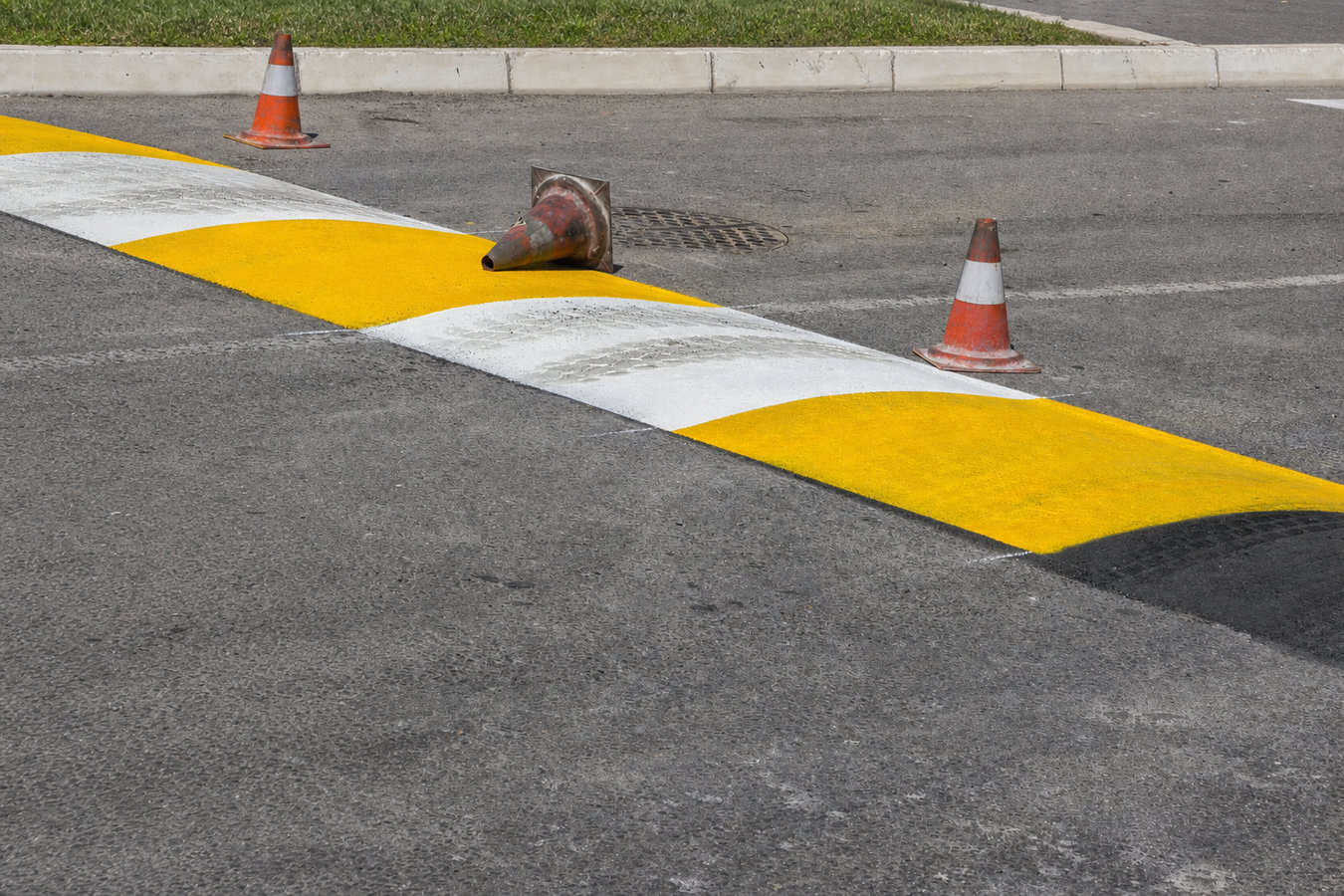
Vehicles moving too fast through your driveway or private parking area? We install permanent asphalt speed bumps with gradual profiles that slow traffic without damaging vehicles.
Speed bump installation in Monrovia means shaping hot asphalt mix into a raised hump across your driveway or private parking area, bonding it to the existing surface, and finishing both the approach and exit with gradual slopes. Most single-bump residential jobs are completed in a few hours, with the area ready for normal vehicle use by the following morning.
A properly bonded asphalt bump becomes part of the pavement. It handles Monrovia's dry summers, occasional storms, and the soil movement common across the San Gabriel Valley far better than rubber or plastic alternatives that can shift, separate, or pop loose. For families in Monrovia with young children or pets who use the driveway area, a permanent bump is the one layer of protection that does not rely on anyone paying attention.
Speed bumps are also a natural complement to other pavement improvements. If you are already planning a resurfacing or freshening up the look of your parking area - which might include asphalt sealcoating - adding a bump during that visit is the most cost-effective time to do it.
If delivery trucks, visitors, or family members consistently roll through your driveway faster than feels safe, a speed bump is the most direct fix. Signage alone rarely changes driver behavior the way a physical feature does. A bump forces every driver to slow before they reach your home.
Monrovia residential driveways often double as play areas or pet zones. A bump near the entrance creates a reliable slow-down point that gives kids and animals a better margin of safety - one that works whether or not anyone is watching from the window.
Some Monrovia private roads and shared driveways get used as shortcuts around busier streets. If your private lane is getting that kind of traffic, a bump is a low-maintenance way to discourage it without confrontations, gates, or ongoing enforcement.
If you are already scheduling a driveway resurfacing - common in Monrovia as older asphalt ages out - adding a bump during that project means one crew visit, one cleanup, and a result that looks intentional rather than patched on. You get more value out of the same mobilization.
Speed bumps are not one-size solutions. The profile - height and width - determines how aggressively the bump slows traffic. A taller, narrower bump brings vehicles nearly to a full stop, which suits a parking area with blind corners or a lane where safety is the primary concern. A wider, more gradual profile slows traffic to a comfortable rolling speed, which works well on a residential driveway where you still need to drive in and out comfortably every day. We also pair bump work with parking lot paving when clients are upgrading a full lot and want traffic management built into the project from the start.
For properties in HOA communities - which are common across Monrovia - written approval from the architectural or design review committee is typically required before installation. We can provide photos, dimensions, and a description of the planned work to help you put together a clean approval request. Once that is in hand, the actual installation is fast. Many clients also ask about optional reflective striping on the bump surface for nighttime visibility - we can advise on that as part of the finishing conversation.
Best for homeowners who want a clear slow-down point without jarring passengers or scraping standard passenger vehicles on daily trips.
Best for private parking areas, shared driveways, and lanes with blind corners where a near-stop is the goal before a high-risk zone.
Best for driveways already being resurfaced - the bump is added during the same project for the cleanest result and best value.
Best for longer private lanes or shared HOA drives where more than one slow-down point is needed across the full length of the road.
Monrovia has a mix of older single-family neighborhoods and newer planned communities, and HOA coverage varies significantly by street and subdivision. For homeowners in HOA communities, confirming approval status before scheduling is the step that protects your investment - an unapproved bump may need to be removed at your expense. We are familiar with how HOA approval requests typically work in this area and can help you put together what the committee needs to see.
The clay soils common across the San Gabriel Valley foothills can shift when wet and dry, which means a poorly bonded bump may start to separate at the edges within a season. We use a tack coat bonding layer before placement and ensure proper compaction - the same standard we hold on larger paving jobs. We serve property owners throughout the area, including Azusa and Covina, where private driveways and parking areas deal with the same soil and climate conditions.
Tell us where the bump will go, the width of the driveway or lane, and what you are trying to accomplish - slowing traffic, protecting kids, or discouraging cut-throughs. We reply within one business day and can usually answer basic questions before the site visit.
We visit your property, measure the lane, check the existing asphalt condition, and confirm the best placement. This is also when we discuss profile options and confirm any HOA or permit requirements so there are no surprises after work begins.
On installation day, the crew cleans the area and applies a tack coat bonding layer before any asphalt goes down. This step is easy to skip but critical - a bump without proper bonding starts to separate at the edges within a season or two. We never skip it.
We place hot asphalt mix, shape it to the agreed profile, compact it, and smooth both the approach and exit slopes. Before leaving, we walk the finished bump with you and confirm placement and profile. The bump is ready for normal vehicle use by the following morning.
We will visit your property, walk you through profile options, and give you a clear written quote. We reply within one business day.
(626) 263-8749A bump that is not properly bonded to the existing surface will start to separate at the edges within the first wet season. We apply a tack coat before every speed bump installation - a step some contractors skip to save time. That bonding layer is what keeps the bump in place through Monrovia's wet-dry soil cycles year after year.
We ask about your vehicles - including any low-clearance cars in the family - before finalizing the bump profile. A well-designed bump slows traffic without scraping bumpers or jarring passengers. Getting the height and transition slopes right on the first visit is faster and cheaper than adjusting after the fact.
For homeowners in Monrovia HOA communities, we provide the photos, dimensions, and written project description you need to submit a complete approval request to the architectural committee. Getting that approval first means the installation goes smoothly - no removals, no disputes, no extra expense.
California requires paving contractors to hold a state-issued license you can verify online. Hiring a licensed contractor protects you if anything goes wrong and confirms the business has met the state's minimum standards. Ask for the license number before any paving work begins - it is a quick check that tells you a lot.
A well-installed speed bump does more than slow vehicles - it signals that your property is managed with intention. For families with young children, for property managers dealing with parking lot incidents, and for homeowners tired of delivery drivers treating their driveway as a racetrack, a permanent asphalt bump is one of the most straightforward improvements you can make.
Protect your driveway surface with a fresh sealcoat - often done in the same visit as a speed bump installation for the best value.
Learn MoreIf you are repaving a full parking area, we can integrate speed bumps into the project so traffic management is built in from day one.
Learn MoreOur crew works around your schedule and can have your driveway safer in as little as one day - call now to get on the calendar.