Loading...
Serving Monrovia, CA and surrounding areas. (626) 263-8749
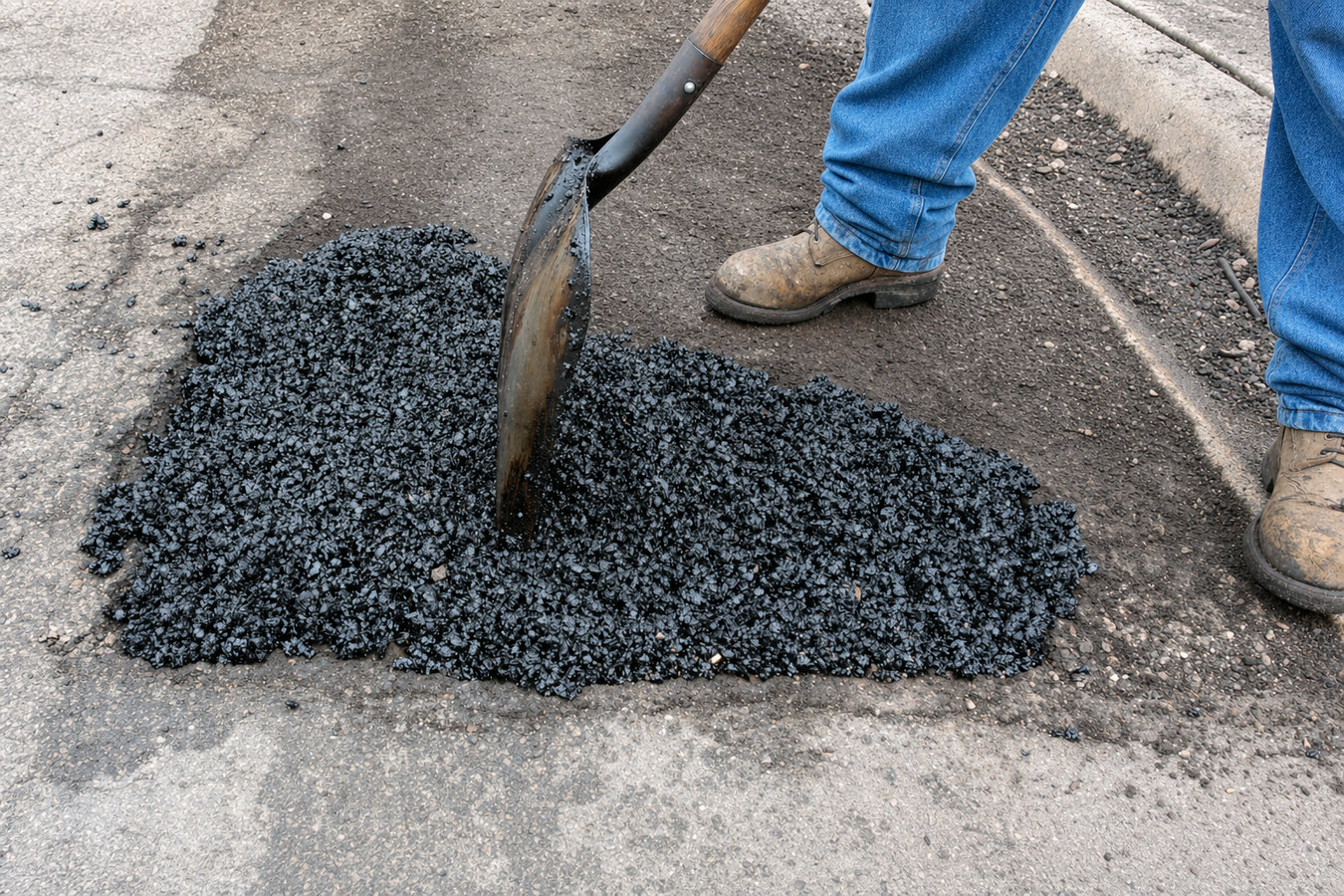
A pothole left open through Monrovia's rainy season will keep growing. We fix the hole and check the base beneath it so the same spot does not fail again next winter.
Pothole repair in Monrovia means removing the loose, broken asphalt around the damaged area, cleaning out debris, and filling the void with compacted hot-mix asphalt - most residential jobs are completed in a single visit and the patch is ready for foot traffic within hours.
In the San Gabriel Valley foothills, water is almost always the root cause. It seeps into cracks, softens the clay-rich base, and then traffic breaks apart the surface above. The prep work - cutting clean edges, drying the area, and applying a bonding tack coat - is what separates a patch that lasts from one that pops out after the next rain. Skipping those steps is why many DIY fixes and quick-pour patches fail early.
If you have a surface that shows alligator cracking around the hole or keeps failing in the same area, the base may need fuller attention. We will look at the whole picture and let you know whether a targeted patch is enough or whether something closer to asphalt repair for the wider section makes more sense.
If you can see a clear hole, bowl-shaped depression, or chunk of missing asphalt, you have a pothole that needs professional repair. Leaving it open allows water to reach the base material, and the damage will grow with every rain and every vehicle that crosses it.
If you have patched or filled the same area before and it keeps failing, the base beneath it has likely been compromised. This is especially common in Monrovia's expansive-soil areas, where ground movement repeatedly stresses the same weak points. A surface-only patch will not stop the cycle.
When you see a web of small cracks surrounding a sunken area, water has already been working its way under the surface. The San Gabriel Valley's wet season accelerates this process. Acting before the crumbled section fully collapses saves you from a much larger repair.
A raised edge, a jagged rim around a hole, or a surface that grabs at tires is a safety hazard. If guests, children, or anyone with limited mobility uses your driveway, a rough or broken surface is a real risk that is worth fixing promptly.
We handle pothole repair for residential driveways and small commercial lots throughout Monrovia. Every job starts with a proper site assessment - we check the depth of the damage, probe the base for softness, and determine whether a surface patch is enough or whether the base material needs to come out first. For a single shallow hole, a standard cut-and-fill repair with hot-mix asphalt and a plate compactor is typically all that is needed. When the surrounding pavement shows alligator cracking or water damage beyond the hole itself, we talk through whether broader grading and excavation work is warranted before patching the surface.
After the patch is placed and compacted, we may recommend a full-surface sealcoat once the repair has cured. This protects the fresh patch and the surrounding asphalt from Monrovia's UV exposure, and it makes the whole driveway look consistent rather than leaving a visible dark patch in the middle of faded pavement. For homeowners weighing whether to patch now or do a fuller asphalt repair project, we give you a straight comparison of both options at the estimate stage.
Right for a single pothole or localized failure where the base is still solid - the damaged section is cut clean, filled with hot-mix asphalt, and compacted flush.
The right call when the base beneath the hole has failed - both the asphalt and the compromised base material are removed and rebuilt before repaving.
Suited for driveways with several problem spots scattered across the surface - addressing all of them in one visit is more efficient than coming back for each one.
Recommended once the patch has fully cured to protect the repair, blend the appearance, and extend the life of the surrounding pavement.
Monrovia sits at the base of the San Gabriel Mountains, and that foothill setting shapes how pavement fails here. The soils in this part of Los Angeles County are often clay-heavy, and clay expands when wet and shrinks when dry. That constant movement stresses asphalt from below, opening cracks that let water in - and once water reaches a softened base, potholes follow quickly. Most of the driveways we repair in Monrovia also have significant UV oxidation from the long, sunny summers. Brittle, gray pavement breaks apart far more easily than fresh asphalt, which means holes here tend to grow faster than homeowners expect.
We work regularly in Monrovia and neighboring communities like Duarte and Azusa, where the same foothill soil and drainage patterns create similar pothole problems. Knowing how water moves in this terrain - and where the base is most vulnerable after a wet winter - is what allows us to do repairs that hold through the next rainy season rather than just until the next warm day.
Tell us what you are seeing - a visible hole, a returning soft spot, or a rough patch. We respond within one business day and schedule a free on-site visit. A photo helps us come prepared.
We probe the base around the hole, check for signs of drainage problems or soil softness, and give you a written estimate that spells out exactly what prep work is included - not just a price for filling the hole.
The crew saw-cuts or mills the damaged area to clean edges, removes all loose material, applies a tack coat to the cut edges, and fills the void with hot-mix asphalt compacted in layers until the patch sits flush with the surrounding surface.
Vehicles should stay off the patch for a few hours in warm weather - longer if temperatures are high or the repair is deep. We give you a specific timeframe and can schedule a follow-up sealcoat visit once the patch has fully cured.
No pressure, no obligation - just a written quote that tells you exactly what the job involves and what it will cost.
(626) 263-8749We arrive with hot-mix asphalt and a mechanical compactor, not cold-patch filler and a hand tamper. That combination is what creates a patch that bonds correctly to the surrounding pavement and holds up under Monrovia's UV stress and soil movement.
We probe the ground around every hole before we fill it. A patch placed over a compromised base fails early - finding out what is happening below the surface is what makes the difference between a repair that lasts and one you call about again in six months.
California requires paving contractors to hold a state license before doing work on your property. You can verify any contractor's license status through the California Contractors State License Board. Hiring a licensed contractor protects you if something goes wrong.
The clay soils, concentrated winter runoff, and intense summer sun in the San Gabriel Valley foothills create specific failure patterns that a general-purpose contractor may not recognize. We have seen those patterns repeatedly in this area and factor them into how we prepare and execute every repair.
Every one of those factors comes together on the job itself. A licensed contractor who checks the base, uses the right materials, and understands local soil conditions is not a premium - it is what a repair that actually holds looks like.
When a recurring pothole points to a failed base, proper grading and subgrade preparation fixes the root cause before new asphalt goes down.
Learn MoreBroader asphalt repair covers crack filling, section replacement, and edge repair for driveways with damage beyond a single pothole.
Learn MoreMonrovia's rainy season turns small holes into large repairs. Get your free estimate now, while the job is still straightforward.